Most web design agencies don’t struggle because they lack talent. They struggle because they lack consistent demand. They land a few clients through word of mouth, deliver great work, and then find themselves scrambling for the next project. The real issue is that their entire business depends on one or two acquisition channels.
Blake started his first web business in 2007 with zero clients and no reputation. Over time, he grew it into a digital services company with clients like the White House, NASA, and the National Archives. The five methods below are the exact strategies he used to get there.
1. Partner With Larger Web Agencies
When you are just starting out, you do not need to find every client yourself. One of the fastest paths to paid work, real portfolio pieces, and real credibility is positioning yourself as a specialist that a larger agency can subcontract to.
Bigger agencies win large contracts regularly, but they cannot always staff every skill in-house. When they land a project that requires something specific, such as a particular CMS, a UX overhaul, or a front-end rebuild, they bring in a smaller shop to handle that portion. This is a standard part of the agency model, and it is an open door if you know how to walk through it.
How Blake Landed the White House
Blake’s first major breakthrough came through this exact type of partnership. REI Systems had won a contract to build data.gov and usaspending.gov for President Obama’s Open Government Initiative. The White House was unhappy with the user experience and front-end design, and REI needed a UX and UI specialist to rescue that part of the project.
Their COO, Scott Fletcher, searched Google for a Washington DC web designer and found Blake. One conversation later, Blake was sitting in the Executive Office of the President, working with Obama’s CIO Vivek Kundra on the design.
That one partnership gave us world-class credibility and catapulted us, almost instantly, into a higher league.
It also came with a sharp business lesson. REI was working on a seventy million dollar contract, and Blake’s team was receiving around five hundred thousand dollars for the design. The user interface is what everyone sees, but most of the money and most of the work live underneath it. The real opportunity was not in being a subcontractor. It was in winning prime contracts directly.
How to Make This Work for You
Find agencies that are bigger than you and are working in the same space. Figure out where they show up, such as LinkedIn, industry events, or trade conferences, and show up there too. Let them know you're available when they need to staff up on a niche skillset. Don't cold call. Build relationships. Get introductions through mutual contacts. And when you do get the work, deliver so well that they keep coming back.
2. Find and Respond to RFPs
Most agency owners have never seriously considered RFPs as a client acquisition channel, which is exactly why there's so much opportunity in them.
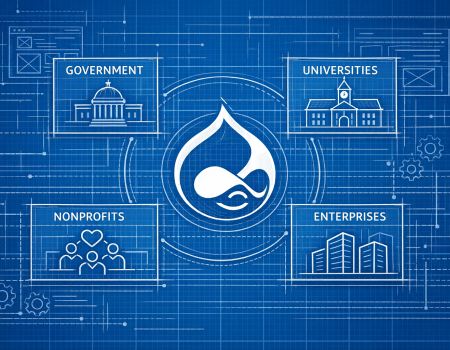
An RFP, or Request for Proposal, is a formal document that organizations publish when they need a specific service and want to invite agencies to bid. We're talking governments, nonprofits, universities, and large companies. The projects are real, the budgets are real, and the clients already know they need help; you're not convincing anyone to spend money they weren't planning to spend.
You just have to convince them that you are the right one to solve their problem.
What Makes RFPs Different
Unlike cold outreach or inbound marketing, RFPs give you a direct window into exactly what a client wants, what they're willing to pay, and how they'll evaluate proposals. Some postings even include the budget right in the document: Blake recently came across a Drupal website project from the state of California with a $1.5 million budget listed directly in the RFP.
Two Ways to Use RFPs Right Now
First, even if you're not ready to bid, start reading RFPs immediately. Study what clients are asking for, learn the terminology, and pay attention to how they evaluate agencies. This shapes your service offering around real market demand; so when you are ready to submit, you're not starting from scratch.
Second, when you do bid, treat your proposal like a project, not a template. Evaluators read dozens of submissions and can immediately spot recycled content. The proposals that win demonstrate a clear understanding of that specific client's problem and a proven way to solve it
3. Dominate Local SEO (and AI Discoverability)
For years, Blake's agency ranked first, second, or third on Google for searches like "Washington DC web designer" or "WordPress development in LA." That didn't happen by accident — it was the result of deliberate, disciplined SEO work. And it turned into a consistent source of inbound leads without chasing anyone.
The reason local SEO matters so much for web design agencies is simple: when someone searches for a web designer in their city, they're ready to hire. You don't need to convince them they have a problem. You just need to be the one they find.
You might call yourself a User Experience Architect, but your client is Googling for a web designer.
This is where most agencies go wrong. They optimize their website for the language they use to describe themselves, such as "digital transformation," "UX strategy," or "full-stack solutions," instead of the plain-English terms their clients actually search. If your prospective client can't find you, you're invisible to them regardless of how good your work is.
Where to Start
Build your website around the exact keywords your target clients are searching. Focus on your city or region first — ranking locally is far more achievable than trying to compete nationally right away. Create content that answers the questions your ideal clients are actually asking. Over time, as your site gains authority, you start ranking for more search terms with less effort. It compounds.
And as noted in the Cowlitz County RFP example above, AI discoverability is becoming part of the brief. Clients increasingly care about whether their agency ranks in AI tools, not just search engines. That's an emerging area worth getting ahead of now.
4. Build a Targeted Prospect List and Do Direct Outreach
Once SEO is generating consistent inbound leads, the next move is going after bigger clients on purpose, rather than waiting for them to find you. That means building a list of the exact organizations you want to work with and reaching out directly.
The advantage web design agencies have here is unusual: you can evaluate a prospect's problem before you ever speak to them. You can see their website. You already know if it's outdated, slow, or built on the wrong platform. By the time you reach out, you're not making a cold pitch: you're pointing out a problem they already know they have.
Blake's Exact Process
He decided to focus on nonprofit organizations and used Charity Navigator, a site that lets you look up nonprofits and see their financials. He pulled every nonprofit association in Washington DC, ranked them by revenue, and selected the top one hundred. Revenue came first because there is no point pursuing organizations that cannot afford to hire you.
From there, he went deep on each one. He identified their CMS, assessed the quality of their site, found the contacts responsible for web projects and procurement, and studied their behavior online through LinkedIn, X, Instagram, and the events they attended.
I basically made sure they knew I existed and kept showing up until I got a conversation.
That's the shift that makes outreach work. It stops being cold when you've done the research, built some familiarity, and can reach out with something specific and relevant. The goal isn't to blast a hundred emails. It's to show up in someone's world until a conversation becomes natural.
5. Build a Referral Engine Through Trust
This one takes time to build, but once it's working, it's the most consistent and lowest-effort source of new clients you'll ever have.
A referred client arrives with trust already in place. Someone they know vouched for you, so there's no cold start, no convincing, and no proving yourself from scratch. They reach out because they have a need right now, and they're ready to get to work.
In web design especially, the market runs on word of mouth. When someone gets a great website, their colleagues notice and ask who built it. One good project can quietly generate three or four more.
How to Become the Agency People Refer
It comes down to how you run engagements from start to finish.
- Be transparent from day one: fixed pricing, clear timelines, no surprise invoices. In an industry where agencies regularly go quiet after launch, simply being responsive and communicative puts you ahead of most competitors.
- Stay accountable after launch. Don't hand off the site and disappear. Check in 90 days later: did traffic go up? Did leads increase? Can their team manage content? If something isn't working, fix it.
- Give a little extra — what Blake calls the "lagniappe." Like a baker's dozen: you pay for twelve donuts and get thirteen. When you consistently deliver slightly more than what someone paid for, they remember it, and they talk about it.
Referred clients don't just save you the time and cost of finding new business. They often turn into your best long-term clients precisely because the relationship started from a place of trust.
The Method That Changed Everything
Of all five approaches, Blake says learning to find and win RFPs had the single biggest impact on his business. It's what opened the door to multi-million dollar contracts and gave his agency a repeatable path to high-value work.
That is exactly why he built the Digital Center of Excellence. The platform makes RFP discovery easier for agencies that are ready to pursue larger contracts but do not know where to start. It centralizes RFPs and tenders from governments, nonprofits, and organizations that need web design and development work, filterable by what matches your capabilities. Join the DCoE for free to browse current opportunities and start shaping your agency around high-value contracts.